You deserve to feel safe in your expression of your sexuality.
You do not have to apologize for other people’s violations.
The world will try to make you feel ugly; you are not.
Recently, I was at bar with some friends. I was buzzed and we were dancing. The bar was full of beautiful people. The blacklight made dust motes look like galaxies. I was happy.
Abruptly, a man shoved his way over to me, grinning. He pinned me up against the wall with his ass and started grinding, hard. I didn’t approach him, hadn’t been dancing with him; it was jarring. Out of a combination of drunkenness and anxiety developed from my personal history, I panicked and lashed out. I barked into his ear: “Hey, get the fuck of off me, okay?”
He stepped back, stunned. He looked at me with disgust. He looked offended.
I stood around awkwardly. Eventually my friend and I moved to the other end of the dance floor. I wondered if I had overreacted—I had been dancing hard. Maybe I looked like I wanted to dance harder. I posed this to my friend and she, of course, called bullshit. “You do not have to apologize. If you were uncomfortable you did the right thing. It’s not about his feelings.”
She was right. I was okay; I’d dealt with this. I had dealt with worse. I wasn’t going let some bro ruin my night. We kept dancing.
Walking home, we happened to pass the same man. He was wasted and apparently pissed. He yelled at us. “You girls are all fucking ugly. Fucking ugly. Especially the one in the middle.” I was in between two friends. We flipped him off and kept walking.
The fact is, I could tell him to fuck off but his words still got under my skin. Ugly. Something to manhandle.
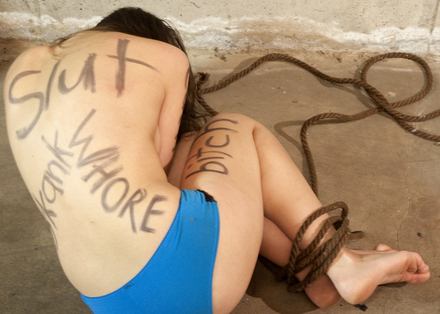
This is how rape culture works. This is how it plays out on daily basis. Bar Bro believed that my rejection justified verbal harassment from him. Rejected, men are socialized to believe, is on of the worst things you can be. So he spat back at me the worst thing that a woman can be: ugly. He wanted to punish me for being sexually unavailable.
And even though I fought back, my internal response was in essence to victim-blame myself. In the same way that I can promote body positivity and genuinely believe that the beauty myth is a load of shit and yet still feel bad about my thighs, I told myself a narrative that I would never tell another woman. As much as I abhor slut-shaming, I seem to have internalized some slut-shame of my own.
If you’ve been in a situation like this, I’m sorry. Use your astute feminist brain to critique it. Don’t apologize. You are in charge. You are beautiful.
We at Broad! have realized that many of our submitters are young adults in high school, which means that many of the people who read this blog are probably young adults who are dealing with this issue of “slut shaming”. Not that the conversation around shaming women should be limited to high school. Definitely not: I want to include everyone, men and women of all ages, in this conversation. N.B.: I use “woman” in this post to refer to any female-bodied or female-identified human who has gone through puberty, and therefore transitioned from girl to woman, however young. It’s science.
As for me, I’m in my twenties, going on fifty, so I listen to NPR a lot, and on NPR recently I heard this segment by amazing sixteen-year-old journalist Temitayo Fagbenle titled “Online ‘Shaming’ a New Level of Cyberbullying for Girls”. The piece made me think that being in high school is maybe a little harder for young women now than it was when I went there, because when I went to high school phones didn’t have cameras, so a guy couldn’t secretly videotape a woman having sex with him and then post that video on Facebook without the woman’s permission, and their peers couldn’t then comment on it and repost it all over the internet, effectively “slut shaming” the woman who didn’t even know she was being taped. So yeah. We didn’t have to deal with that, although people in my high school definitely knew how to participate in the timeless sexist tradition of shaming women for their sexual activity, clothes, and behavior. Adults participate in this too; clearly, since just last month internet celebrity Jenna Marbles posted her video “Things I Don’t Understand About Girls Part 2: Slut Edition”. The video reinforces so many sexist assumptions about women and sex that I’m not even going to link to the whole thing, but instead will show you parts of it through the response of Sex+ vlogger Laci Green, who debunks Marbles’ slut bashing myths. Note: both vloggers use crude language in this video. Not safe for work.
If you watched the video, hopefully you’re clear on what slut shaming means and why it’s dangerous, and if you didn’t, here are some takeaways:
Slut shaming is based on a societal tradition of women “earning” respect and approval through “good” (i.e. monogamous) sexual behavior.
Slut shaming is based on a double standard and is a punishment for women who exercise the same sexual freedom as men.
Slut shaming is not about “self respect”. It’s about controlling women’s choices.
Slut shaming leads to victim blaming in cases of sexual assault, and perpetuates rape culture.
We at Broad! do not condemn or shame women for the clothes or makeup they wear, the photos they post online, the number of sexual partners they have, or what they do with those sexual partners. Nor do we blame victims of assault or rape for what they were wearing, or where they went, or any drugs or alcohol they might have consumed, because the fault is always that of the person who chose to assault or rape the victim. Why do we not participate in slut shaming and victim blaming? Because we’re gentleladies, and gentleladies have manners, dear. And also because we are committed to working toward a future of gender equality, which includes a sex positive culture for women and their choices, and the end of the rape culture we have now.
But I didn’t say it was easy. Standing up for women is always hard in a society that rewards slut-bashing, victim-blaming, rape culture behavior and silences feminist speech. Standing up for yourself and others is especially hard if you’re in high school. Still, here are some things you can do to stop slut shaming.
1. Don’t participate in making mean comments on photos or videos of women who are being “slut shamed”. It’s pretty easy to avoid commenting or “liking” something that is meant to bully someone else, so one of the best things you can do is just not participate.
2. Redirect others who are participating in slut shaming by pointing out how hurtful it is for the person being shamed, and how their sexist comment or action plays into rape culture. Urge them to respect individual womens’ choices and resist judgmental thinking.
3. Drop shaming words from your vocabulary: slut, whore, skank, bitch, c—, etc., etc. If there isn’t a true male equivalent for a word like this (and there usually isn’t), then by using the word to describe someone else, you’re participating in a double standard that actively shames women for exercising the same freedoms as men. “Manwhore” just doesn’t have the same connotation as “slut”, and honestly, you’ll do just fine in life without using either of those words.
4. Get new nicknames for your female friends. I used to sit next to these two women in a college class who would greet each other with “What’s up, whore” and “hey, slut”. It was…endearing? And showed how much they loved each other? Seriously, I’m all for reclaiming words the way SlutWalk wants to reclaim the word slut and the LGBTQ community has reclaimed the word queer, but something tells me that wasn’t the point for these two. Unless you’re actively reclaiming a shaming word to give it a more positive connotation, maybe greet your female friends with words that don’t invoke such negative stereotypes.
5. Encourage male friends to respect women, and discourage their slut shaming comments or actions. In the NPR segment, Fagbenle interviewed a friend who said he received 2,000 Facebook friend requests after publicly posting an intimate photo of a young woman he knew. He felt good about participating in slut shaming because of all of the positive attention it got him. That kind of positive attention for men who do sexist things is part of what perpetuates rape culture. Men who discourage other men from slut shaming, and encourage them to respect women instead, will have an especially powerful influence on their peers.
7. Participate in activist gatherings like SlutWalk and Take Back the Night. These can be empowering and help you build a community of people who respect women and women’s choices. You’ll be able to make your voice heard and work to end sexism, rape culture, and sexual violence.
8. Participate in the conversation right here, in the comments section! We’d love to hear about your experiences with these issues and listen to your opinion.
Maybe your heart races all the time and you’re not sure why. It batters your ribcage like a dazed bird against a windowpane. You skip breakfast because you have a vague, persistent ache in your stomach. If you speak in class you start stuttering like your pulse.
Maybe you’ve got memories that reel unbidden through your mind, a movie on mute and fast-forward. You sleep little. Sometimes you shake. City buses make you implode. Your internal monologue is very scared and very loud, much of the time.
“Anxiety is the dizziness of freedom.” I saw that scrawled on a bathroom stall. I like the the ring of the words, though I don’t know if they’re true. I do know a few ways to quell dizziness.
1. Go for ambling, aimless walks: you need to get out of your head. It doesn’t much matter where– urban and natural landscapes alike are throbbing with Things That Have Nothing to Do With You. It’s grounding to be amongst them. Try to think of nothing but the flex of your muscles and the rhythm of your steps. Take hard, hungry breaths that burn your lungs a little.
2. Make a Playlist for Chilling Out. This doesn’t have to be a slow or soft playlist. Ambient electronica might be soothing for a lot of people, but maybe the rawness of riot grrl or hiphop does it for you. Have no regard for niche or snobbery– if Ke$ha calms you down, have no shame.
3. Clean like a motherfucker.
4. Make art, whether you think you can or not. Perfectionism is paralysis, and breeds more anxiety. Urgent creativity is cathartic and sometimes produces shitty art. That’s great– shit is fertilizer.
5. If these methods sound a little clichéd or superficial, it’s because they are– they’re worth doing, but they won’t provide sustainable stability. Mental illness is cyclical. Severe anxiety can’t be washed away in a bubble bath. Find a good shrink if you haven’t. If you’re uninsured, don’t be afraid to ask about a sliding scale; many therapists will be willing to work with you or to refer you to someone who can. If you’re a student, your campus may have free counselors. Keep in mind, though, that therapy can make you feel messier sometimes. Analysis doesn’t necessarily help the hyper-analytical. Medication is fickle and can be hard to obtain. If treatment isn’t feasible for you, coping mechanisms become vital. Know yourself and what you need. Try not to get entangled in self-diagnosis- the internet can make you into a psychological hypochondriac. You are not a list of symptoms.
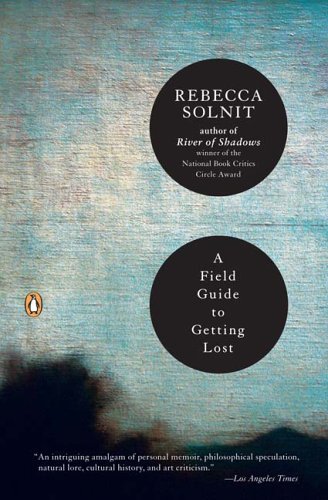
Though the title of this book is paradoxical, it becomes oddly accurate, as Solnit guides the reader into an introspection and a comfort with not knowing, with being lost. It is one of those text-artifacts that is what it means, in that Solnit not only writes about various ways of getting lost, but has a language that spirals in on itself, refusing clarity in search of a deeper grace. From meditations on blueness, to story-songs that map landscapes, to white settlers (or invaders) taken captive by Native Americans in the 1800s, and through her own flirtation with punk rock, Solnit leads the reader on a fascinating, meandering tour.
Readers could expect this book to be absorbed in geography and landscape, but what is surprising and lovely is the intensity with which Solnit stares beyond these landscapes, into their hidden things. There is much meditation on this book about darkness, about mystery. And though there are many quotes I could choose, I think this one suits my purposes:
“It is the job of artists to open doors and invite in prophesies, the unknown, the unfamiliar; it’s where their work comes from, although its arrival signals the beginning of the long disciplined process of making it their own. Scientists too, as J. Robert Oppenheimer once remarked, ‘live always at the ‘edge of mystery’—the boundary of the unknown.’ But they transform the unknown into the known, haul it in like fishermen; artists get you out into that dark sea.”
The dark sea is of course blue, a color that Solnit constantly re-evokes because of its connection with distance, with lost things: blue—as in the sky, as in the ocean, as in the faraway—is not real, but an intricate mixture of light and desire.
I wondered, after reading this book, about my ability to access the dark blue unknown, to go there and get lost. With my GPS and my cell phone, with email and social media accounts and blogs, with Google tracking all of my website visits and advertisers targeting their online commercials to my preferences, there is no longer the same possibility for being lost: for remaking and renaming oneself; for transformation. It feels crass to bring the buzz of the digital age into conversation with Solnit’s work, which is so deeply engaged with the real and the true of history or nature and never with the cheap, passing fads of popular culture. Still, our post-Enlightenment culture worships science, and with these technologies we all seem to be desperately striving to make the unknown known, to haul in all of the mystery and desire we can find, map it, tag it, and monetize it.
I left Facebook for a matter of months and some of my friends behaved as though I had left the world, had gone missing. In the summer during this hiatus a more iconoclastic, nomadic friend passed through town and we met at an arranged time and place because he had discarded his cell phone somewhere between North Carolina and Utah. We found each other but got lost in the park where we walked, forgetting the time along the way. We discussed trust and how leaving digital life is a form of going astray; there comes a doubt, a frustration, from others who would prefer you to be always found. I would like to say that losing a cell phone or an online account is like getting lost in Solnit’s sense, but it is only a taste of that underworld; further transformation cannot take place with so many watching. Much of A Field Guide tells stories of hermitage, of reveling in solitude.
Solnit recognized the anxiety we have historically felt about getting lost, about separation from community, about the unknown. But seven years after she published this book, I have to think that anxiety has been amplified with our fixation on digital identities. Recently I recreated my Facebook profile and was instructed many times, in the imperative, to “find friends”. Today Google+ informed me, after I added three Broad! editors to my circle for a virtual meeting, that I “might be lonely!” if I didn’t contact more people. I think if we are anxious about getting lost, with its implications of loneliness and separation, we are now even more fearful of being lost, of not being remembered in an age when every moment can be simultaneously archived forever and forgotten immediately, buried under so much that is happening in the present. But to continue with Solnit’s paradox, I hope A Field Guide to Getting Lost never will be lost or forgotten; it is an increasingly relevant work of literature that promises to endure.
This is the second presidential election I have been legal to vote in. The first, in 2008, was my study abroad semester in college and I voted absentee a few weeks before Election Day. (I’ve been lucky to have some amazing experiences in my life.)
So, okay. It’s the day before the 2008 election, and my American flatmate and I are on an elderly bus jolting up a mountain in Sicily. There’s a medieval-era, gated village at the summit and we’re damn well going to see it before we fly to Barcelona the next day. We’ve been trying to catch this bus for three days.
We find ourselves outside the gate with two others, a man and woman about our age. “Canadian?” the man asks, with a strong Australian accent. We explain we are American, actually.
“Interesting time to be an American.”
“Yeah! Tomorrow!” And the four of us laugh awkwardly, thinking of what the next night might bring.
It turned out that the Australians knew a ton about our election. As in, they had been following it religiously online, on television, even on the radio. They knew who Sarah Palin and Tina Fey were. They quoted interviews with Biden that I hadn’t heard of, and I thought I’d been following the election cycle pretty closely. Though they lived more than half the world away — a plane ride longer than a day! — they cared about who the U.S. elected for president. Because it impacted them; impacted their country. And there I was, mortified to realize I was only 80% sure that Australia had a Parliament. I couldn’t tell you any one of their leaders, let alone their prospective leaders.
As an American citizen, you’re raised with this idea that the United States is #1 and the world’s only remaining superpower and the Best Ever, period. Parallel to that is the idea that we should teach other countries how to live, that we’re a role model. Well, whatever others think of us, we are by default influential. The way we take care of our elderly, sick, women, people of color, disenfranchised or disadvantaged, and our citizens that don’t fit into the mainstream heteronormative mold or gender binary: that doesn’t just impact our citizens. It reflects us to the world. If our country is going to be a role model, let’s (re)elect someone who will act like it.
So… Hurricane Sandy happened. Are you safe? I hope that wherever you are living right now, it is safe and with heat/water/electricity.
As you doubtless know by now, the New York-New Jersey area — as well as other Eastern Seaboard states such as Virginia — got pummeled. The president has declared NY and NJ literal, legal disaster areas. (Photos of the devastation at CNN.)
If you want to help with the relief efforts, here are some places taking donations:
The American Red Cross (obviously). Particularly the Greater New York branch. You can donate money through mail, telephoning with your credit card number, via their website or, more mysteriously, via texting “REDCROSS” to 90999. The text automatically donates $10 to the organization’s Disaster Relief branch, which helps with relief efforts in general; this doesn’t specify if your $10 would go to Sandy relief efforts exclusively (or at all). I imagine that right now, though, at least part of your donation would go to Sandy. It’s my understanding that any texted donations will show up as charges on your phone bill.
The Red Cross does not accept donated goods (e.g. clothing, canned food, etc), as that would require diverting part of their workforce toward sorting, shipping, and distributing said goods. It’s more efficient to donate money to the relief efforts; the Red Cross can buy needed items nearby the affected communities, assisting their local economy and saving precious time.
They do, of course, accept blood and platelet donations, and those are needed more than ever.
Food banks run by Feeding America is supplying basic meals in the aftermath and Direct Relief International is working to give people healthcare in the 16 states affected by the storm, especially individuals’ access to pharmacy services. Given that the MTA in New York continues to be shuttered and that transportation remains an issue in several other states, this is not something to dismiss.
Recently, NPR Books compiled a list of the “100 Best Young Adult Novels.” Audience members were invited to nominate and then vote for the “best” examples of young adult literature. The response was overwhelming: NPR received nominations from 75,500 listeners. If this project is any indication, the general public is passionate and opinionated about young adult books. As a writer and an advocate of literacy, I find this heartening.
However, the list itself has discouraging implications. The audience selected only two books –– out of one hundred –– that feature protagonists of color. The NPR Ombudsman blog has already addressed the methodology of the poll and the role of its panelists; I think the list speaks less to the incompetence of NPR than to the invisibility of certain stories, and perhaps the inherent danger in declaring “bests.” Blame notwithstanding, touting the best books as ones almost exclusively about white people perpetuates white privilege and marginalizes a multitude of stories. And what about other facets of identity –– class, sexuality, gender –– that teens are coming to terms with? One thing that surprised me about discussion of the list is that it essentially stopped at race.
I believe that YA literature is crucial. It’s not just important that kids read books. It’s not just important that kids read good books. Kids need characters and stories that they can identify with –– books that reflect their own varied experiences and struggles. By extension, they need characters and stories that challenge them as well, provoke them to consider their place in the world and engage with narratives they might not encounter in their own lives.
Adolescence is a great time to read –– as a teenager, reading is fun and free of pretension. Books sustained me in middle and high school. They were an escape, certainly, and they were entertainment. But beyond that, they allowed me to conceive of the world beyond my tiny corner of it in a vivid and beautiful way (I grew up in a small, somewhat isolated and chronically rainy town in Alaska).
By reading voraciously, I was exposed to lives along myriad racial, cultural and socioeconomic lines outside my own experience. While this list features some excellent books, its heterogeneity confuses and saddens me. My broad inference is that overwhelmingly, teenagers are either deprived of stories about themselves or deprived of stories about the world. At a time when most of us are utterly absorbed in ourselves and yet at the same time developing a social consciousness, we benefit from stories of both.
Last month there was another article in Poets & Writers about whether or not creative writing can be taught. In it, Gregory Spatz told the story of a student who came in writing cliché material, worked hard in his MFA program, and ended up publishing a book of short stories…so voila, the answer is yes, creative writing can be taught!
It makes sense that this kind of article would show up in the annual MFA issue, along with program rankings and short articles about various new programs. There’s always an article like this somewhere; we can’t seem to stop asking whether good writing is the result of talent or hard work. Gregory Spatz does argue that writing can be taught, but he also ended his article with a list of four character traits that helped this student to be successful: “dedication, desire, drive, and discipline.” Desire and drive are the same thing; dedication and discipline are pretty much the same thing, so in the end, according to Spatz, there are two main factors deciding whether or not you can write: you have to want it, and you have to work hard.
People buy the MFA issue and read those articles because they want to know if a studio master’s degree in writing is the right choice for them; if it will be worth the time and money and result in better writing. There’s the ongoing debate, which has its moments of eruption on the internet, about whether getting an MFA actually improves your writing, or turns it into boring, cliché literary fiction, or whether you need an MFA to get fellowships and publications, and really, the only answer to either of these questions is, it depends on you. The best answer I’ve heard to the question of what an MFA does for you is that it speeds up the process. If you want to be a writer, and you’re working hard at reading and writing, and you’re getting honest feedback and revising, you might improve. But if you’re doing all that in an environment where you are given time to write, and you write a lot, and the feedback you get is from professors and students who know what they’re talking about, you might improve faster. So, is that the place where you want to spend your time and get your feedback?
I get tired of that debate about what kind of fiction MFA programs “produce”. Teachers and programs don’t produce writers. Writers produce writing, and if you’re complaining that most of the writing by MFA graduates is mediocre, well, I have news for you: most writing is mediocre! While we should be skeptical of the institutionalization of art, the idea of the individual genius writing on his own is equally dangerous. Someone has to decide what counts as genius, and geniuses have generally had gifts of money and time that allowed them to hone their creative gifts, which is to say that those deemed genius are usually privileged. What I like about MFA programs is the possibility for diversity; the idea that anyone can be accepted for his/her potential as a writer and then given funding to read and write.
People also get upset because having MFA programs for writers creates a system in which some writers can be seen as more legitimate than others. The same debates still rage for visual artists and musicians. Maybe, for some editors and programs, seeing that someone has a degree makes a difference, but I would say the most important factor in any decision is always the writing. I see flat, uncertain writing from MFA graduates all of the time; I also see compelling, original writing from people who don’t list MFA programs in their cover letters. And the opposite is true for each. I agree with Spatz that writing is not pure talent or pure teaching; it’s some combination of characteristics in the writer’s personality that work to help him/her learn. I’d also like to expand that list just a bit, beyond desire and discipline, because I think there’s more to it than wanting to write and working hard.
Imagination. When people speak of talent in creative writers, they may talk about a finely honed sentence or line of a poem, but I think the root of it is always the writer’s imagination. Imagination is a part of the unconscious that we all have access to, and maybe some people have more access to it, or they tap into it more. To demonstrate imagination in writing requires risk taking; it requires thinking differently from other people and presenting bold ideas that very well may fail. It’s key to good creative writing because it is the creativity, that raw talent that shines through. I know that teachers can teach reading, writing, and revision strategies, and I know that hard work can produce better writing, but creativity comes from within.
Humility. You have two ears and one mouth; use them accordingly. Humility is important for accepting feedback and revising, for checking the ego while writing, and for receiving numerous rejections from magazines and publishers. Humility is the place from which dedication comes. Humble writers read more than they write and learn from the books they read. They continue writing because they are not yet satisfied. Humility means being wary of praise and self-congratulations, and it means being willing to ditch failed work and start fresh. Being open to growth and improvement as a writer often means pushing the ego out of the way. That said, you need to be just foolhardy enough to attempt risky projects in the face of failure.
Obsession. You have to be obsessed. I mean, you have to be batshit crazy about sitting alone at your desk for hours and just making things up, and then revising those things over and over. Desire and drive are much too mild to cover this one. Obsession means needing it even when it doesn’t make you happy, and refusing to stop even if you’ve crossed the threshold of humility and gone straight to despair, which, like arrogance, can be a trap. But, short of clinical depression, your obsession should be able to drag you out of that discouraged place and get you to start over, simply because you have to. This is also where perfectionism and dedication come in, because the willingness to work comes from an obsession with making the work better.
These are the things that cannot be taught. Like Spatz, I want to argue that creative writing can be taught like any other subject, but I always end up arguing that it is something in the personality; it is some particular combination of qualities that make people pursue writing. Because, in the view of the rest of the rational, logical world, writing is crazy. It’s nuts to spend hours making up stories that, in all likelihood, very few people will ever read. It’s nuts to go into any kind of debt for a master’s degree that, in all likelihood, will not result in a related career. It’s a fool’s errand. So, to do it and do it well, maybe you just have to be that particular brand of fool.
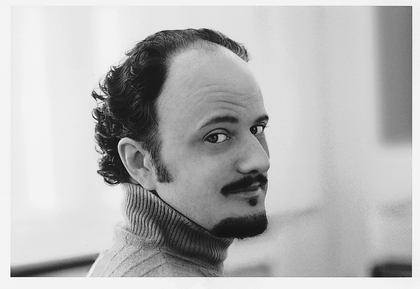
Jeffrey Eugenides is a wonderful writer. I loved, and love, Middlesex. But the recent interview he gave with Salon, specifically the bits about gender in the literary world, surprised and disappointed me. It’s not his ignorance of the issue so much that bothers me; it’s his denial of it, the dismissive tone of his response, the unwillingness to engage in an analysis of his privilege beyond an offhand “You know, it’s possible.” Yes, I know it’s possible. VIDA knows it’s possible. It’s more than possible. How could the person who wrote Middlesex –– a novel about the permeability, and the cultural centralization of, sex and gender –– not believe in gender bias?
Eugenides argued that Zadie Smith is as well-respected and reviewed as Jonathan Franzen and the Great (White) Male Writers of his ilk. I agree with him on that point… but that’s Zadie Smith. One author. Marie Curie discovered radium, but one wouldn’t look back on scientific history and claim that women were (or are) as respected or prominent in the field as male scientists. I could list a handful more women writers held in high literary esteem (Margaret Atwood, Toni Morrison, Doris Lessing, Alice Walker) but the list would run out far, far sooner than the list of male authors regarded in the same light.
There’s a difference between the work that Franzen produces and that which Jodi Picoult produces, he said. I agree with him there, too. Picoult produces beach reads; Franzen produces heavy tomes about”the way we live now” (as Time famously hailed Freedom). Personally, I don’t enjoy either writer’s work, but there is a clear difference in their sentence, character, and plot construction. Franzen wins reviews; Picoult wins the “average” consumer. But Jodi Picoult, in the notorious tweet that launched Franzenfreude 2010, said nothing about Jodi Picoult. Nor did she say anything about the type of book that Jodi Picoult writes (nor the audience that reads them: typically cast as middle-aged, middle-class, and female, invariably mothers, belonging to a book club full of other mothers). Picoult was talking about the difference in general between the way men and women are received in the literary world. To misunderstand this as Picoult “bellyaching” about her own work’s designation of low culture versus Jonathan Franzen’s as high culture seems intentionally simplistic and irresponsible. It shrinks and delegitimizes Picoult’s point by ignoring her point.
Men write about divorce and it’s hailed as The Way We Live Now. Women write about divorce and it’s hailed as Women’s Fiction. Because why would someone who isn’t a woman want to read about them? “[I]t usually has nothing to do with their gender,” Eugenides said, “it’s just the marketplace.” But that’s exactly my point. The marketplace itself skews toward the historically most common reader demographic: white men. Work by writers of color is often expected to concern itself with their race or ethnicity, and when it does, it’s often marginalized –– if not by way of bookstore organization (e.g. “African-American Literature”), by way of cover art (Sociological Images has a good breakdown on this regarding work by writers of Asian descent). These stories are othered. We want to highlight the work, the idea goes, but we don’t see it as normative and don’t anticipate the author to receive a widespread American audience.
There are always exceptions –– Jhumpa Lahiri, for one –– but in my experience as a consumer that seems to be the case. We didn’t even read multicultural authors when I was in public school, now that I think about it. We read Harper Lee to learn about racism in the American South and Pearl S. Buck to learn about China. Of course, I can’t speak to everyone’s experience, only my own.
Women writers may not have a designated area of the bookstore, but their work is still discriminated against and marginalized in the way it is marketed. (Let alone how often it is reviewed, or even published.) Meg Wolitzer’s article in the New York Times, referenced by Eugenides in the interview, rings true and valid. Perhaps he should read it again.
Once, I had a writing teacher that told me I should write every day regardless of what was going on in my life. “I don’t care if your mother dies,” she said, “you write through it.”
“Oh. Oh. Okay.”
And then I graduated, got super depressed, and forgot all about her advice.
* * *
The first step is to try not to feel bad about feeling bad. This is near-impossible at times –– most of the time. Goes without saying that it can be really fucking difficult, in a culture that perpetuates the idea that the disenfranchised are lazy, greedy assholes and hard workers are successes, to accept that sometimes bad things just happen and you fall into a depression deep enough it seems like you can’t dig yourself out. Allow yourself the leeway to feel bad without labeling yourself pathetic or a failure or weak or hypersensitive or etc. etc. etc. because of it. Feelings aren’t rational or moral. They aren’t indicative of something innately wrong with you. They just are.
If you start to feel bad about feeling bad, and you’re driving a car, pull over and wait. Tell yourself that some days suck, period; you can feel better; you will feel better, at some point. Wait until you finish crying and hiccuping. Sit on the shoulder. Turn off the radio; brightly colorful music can make one just as heartbroken, sometimes, as sad songs, and eventually you will have to continue driving somewhere. Think of where you want to go. Think of how you will get there.
Try not to punish yourself for being you. Say, if you’re sad and only feel in control by skipping meals, make yourself eat. Even if it repulses you as you’re doing it. Even if eating makes you feel sick. You’ll get sicker if you don’t. This will be hard; I’m sorry.
Talk to your friends. Start here. Sometimes it’s easier than talking to family.
If you have the kind of family environment where this seems doable, talk to your family about how you feel.
Write like a motherfucker. (Or draw, compose, make YouTube supercut videos –– whatever artistic outlet you have. If you don’t have one, please try to find one. Create something.)
Some of what you create will be amazing. Some of what you create will be shit. This is totally okay. In fact, it’s the case most of the time. We all have shitty patches.
What are you afraid of? Make a list. Put it on the wall where you can see it. Stare it the fuck down.
Watch “How to Be Alone.” When this went viral I watched it enough times for it to sink into my pores. The poem’s transcribed on my wall. It helped.
What do you want? What do you want to do? Make another list. Put it next to the other one. How many of the things you want are you not pursuing due to fear?
Roll around on your friends’ floors/couches/beds and cry.
Find a therapist in your area, if you can’t dig yourself out. Or even if you’re making small scoops, little indents in the side of the hole wall with a soupspoon. No human is an island.
When you’re at a point where you don’t feel terrible every day, maybe only once a week –– or once every two weeks, or a month, or two months –– when you’re a point to engage again with the world, almost, maybe, mostly –– reread the list from Step 10. Pick something you want and make yourself do it, even though it might still be scary. You can’t be the type of person who does such-and-such unless you just do such-and-such.
Be a person who does such-and-such.
This post is Heather’s contribution to Molly Templeton’s How-To Issue.






 Broad!